
Quick Answer
A website in Delhi NCR’s crowded market has one job above everything else: convince someone within seconds that this business is worth their time and money. That means fast loading, a fully responsive layout that works on any phone, and an easy path to calling or messaging you. A web design company in Delhi that gets this right builds sites meant to turn visitors into paying customers, not just something that exists because “every business needs a website.” UTS Sites designs for that outcome specifically, whether you’re running a shop in Karol Bagh, a firm near Connaught Place in New Delhi, or a startup working out of Dwarka.
Key Takeaways
A basic business website in Delhi typically runs ₹15,000 to ₹35,000, professional custom builds land between ₹40,000 and ₹1,00,000, and e-commerce sites usually start around ₹50,000. Mobile-first design isn’t optional anymore since most of Delhi’s traffic comes through phones first. Every project includes 6 months of free maintenance, so nothing breaks silently right after launch.
Does Your Website Actually Work, or Just Exist?
Most business owners assume their site is fine simply because it’s live and hasn’t been touched in a while. That’s usually the first sign something’s wrong.
Pull your site up on your own phone and try reading a paragraph without zooming in, if that’s a struggle, so is it for everyone else visiting. Time how long the homepage takes to fully load, anything past three seconds and a real chunk of visitors have already left before seeing anything. Try finding your phone number or WhatsApp link within five seconds, if you can’t locate it quickly on your own site, customers definitely can’t either. Search your business name from your phone and look at what actually shows up, a broken snippet or outdated info there often becomes someone’s first impression before they’ve clicked anything. And check when the site was last updated, stock photography everyone recognizes and cramped, dated layouts quietly tell visitors the business hasn’t paid attention in years.
If more than one of these sounded familiar, the site isn’t just “a little old.” It’s actively working against new business coming in.
Types of Websites for Delhi Businesses
Different businesses need fundamentally different kinds of sites, and figuring out which one fits matters before any design work begins.
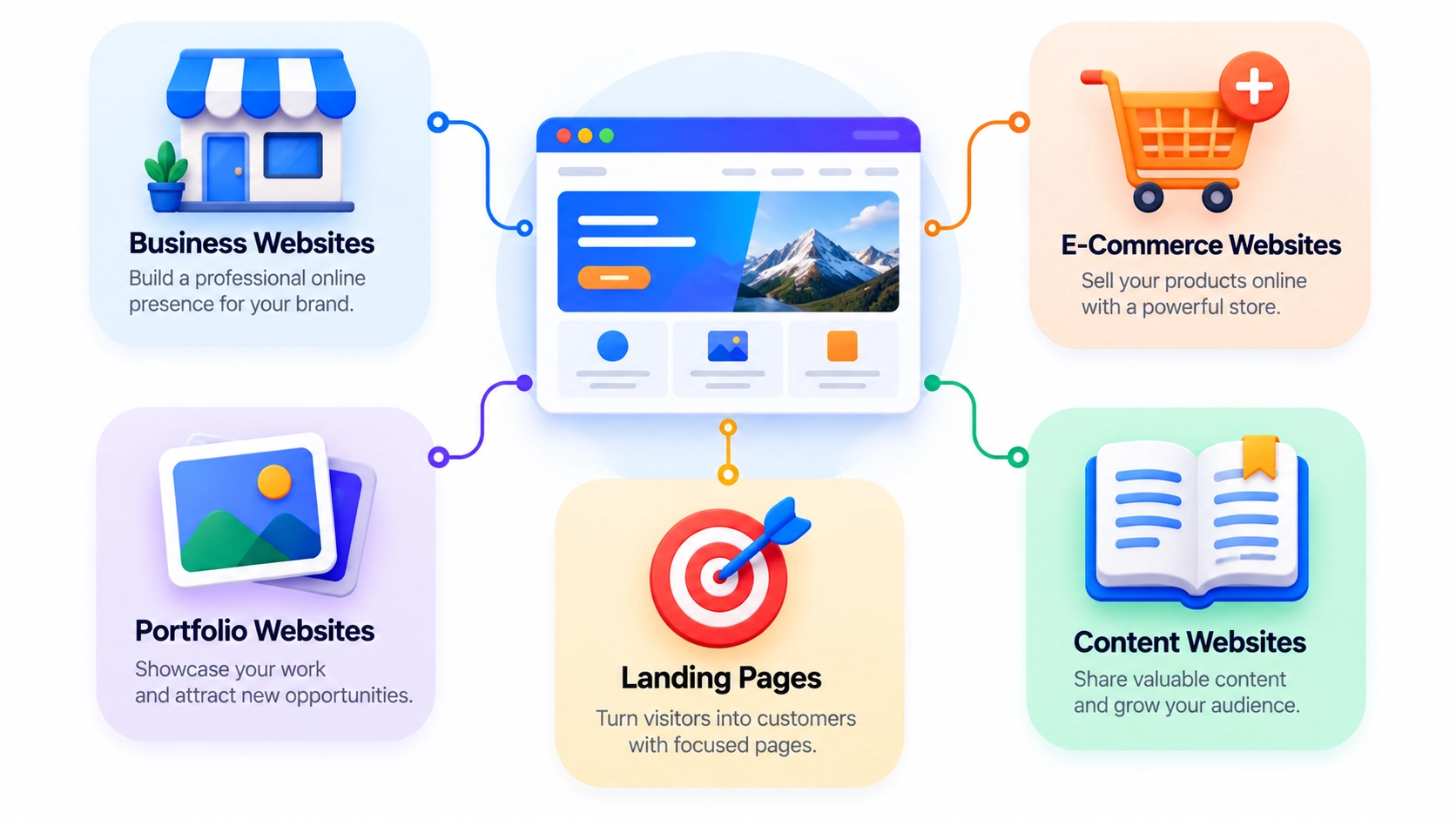
A service or business website works for most local shops, consultants, and firms, it explains what you do, builds credibility, and pushes visitors toward a call, form, or WhatsApp message. E-commerce sites are a different build entirely, product catalogs, payment gateways, checkout flow, and inventory tracking all need to work together seamlessly. Portfolio-style sites suit designers, architects, and creative agencies where the actual work needs to do the talking instead of paragraphs of text. Landing pages exist for one purpose, usually tied to a specific paid campaign, with nothing on the page to distract from a single action. And content-driven sites, essentially structured blogs, are built to rank for a wide spread of search terms over time through published articles rather than one static page.
Many businesses start with something simple and add an online store or content section once there’s traction to justify it. That decision is part of the conversation before design begins, not something bolted on later as an afterthought.
Technologies We Work With
The right technology stack depends entirely on what the site needs to do, not what’s trendy at the moment.
Picking a CMS depends on what the site needs to do. WordPress and WooCommerce handle most business and e-commerce needs, letting you update content yourself without calling a developer for every small change. If the goal is purely selling products, Shopify usually wins, payment processing and inventory come ready-made. Some projects need more than any CMS offers out of the box, and that’s where PHP or Laravel take over, unusual requirements without an inflated budget. For anything closer to an app than a website, expect fast interactions and constantly updating content, React paired with Node.js tends to be the better fit. Quietly running underneath most of this sits MySQL, storing everything from product listings to customer records.
Picking the right stack from the start avoids the expensive problem of outgrowing a platform within a year and needing a full rebuild.
UI/UX Design: The Part Visitors Actually Feel
Good design isn’t just how a site looks, it’s whether visitors can actually find what they need without frustration.
UI (user interface) design covers the visual layer, colors, typography, button placement, spacing, everything that makes a page pleasant to look at. UX (user experience) design goes deeper, mapping out how someone actually moves through the site, from landing page to contact form, and removing friction at every step along the way. A site can look polished and still perform poorly if the UX underneath is confusing, buttons in unexpected places, forms with too many fields, or a checkout flow that loses people halfway through. Both need attention together, not just one or the other, for a site that genuinely converts visitors into customers.
Web Design and Google AI Overviews
This shift in how search works is worth understanding, because it changes what “good design” even means now.
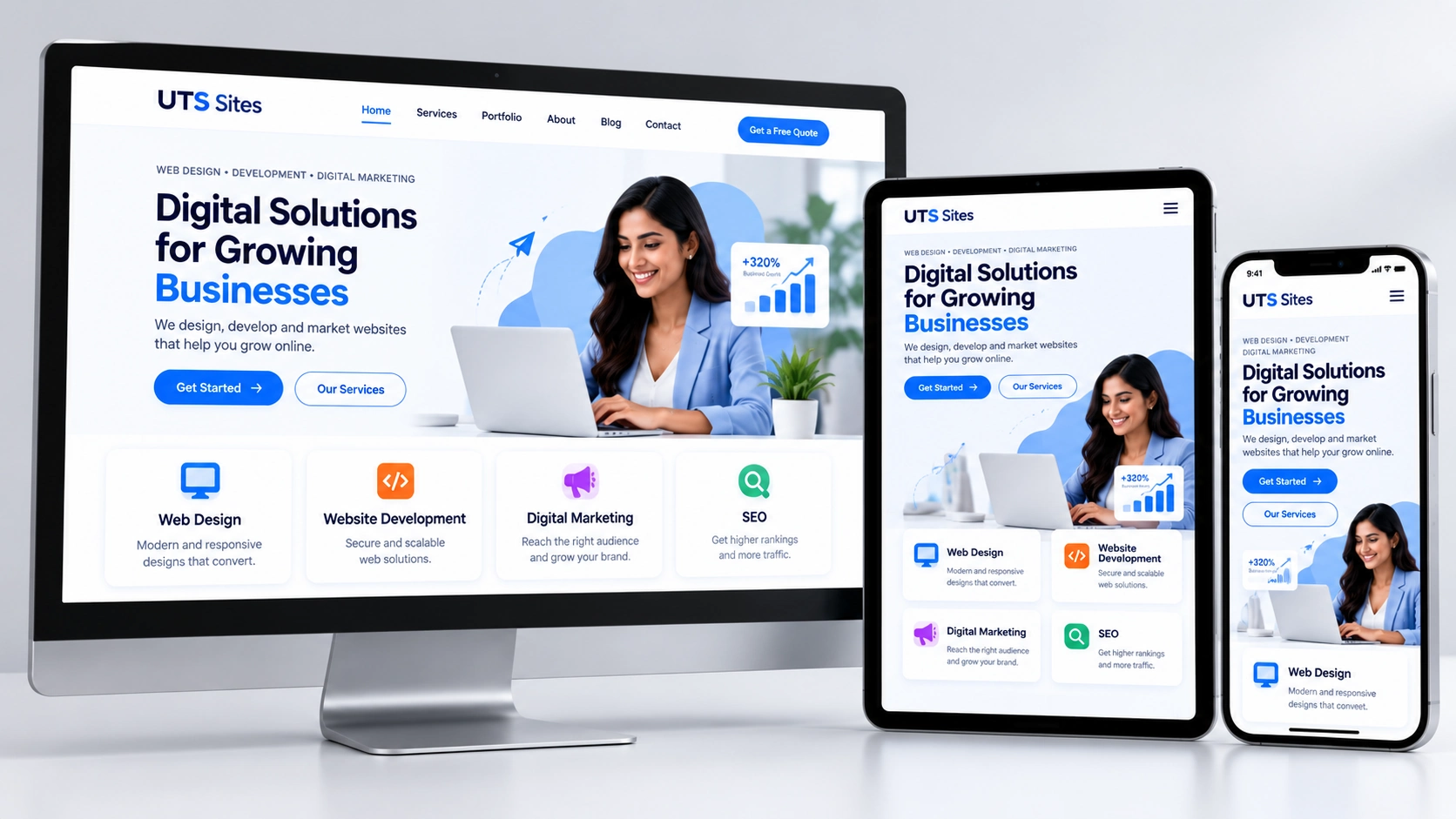
Google increasingly answers searches directly through an AI-generated summary at the top of results, and it can pull that summary from your site’s content even when you’re not ranked first. Clean, properly structured HTML with real headings and logical sections makes it far easier for Google’s systems to read and lift content from your pages. Site speed carries extra weight here too, a slow-loading site is less likely to get crawled thoroughly enough to appear in these AI-driven results at all. Schema markup, whether for business details or an FAQ section, hands Google structured data it can pull straight into an Overview or a local listing card. And since a large share of AI and voice searches happen on mobile, a site that isn’t genuinely responsive is fighting an uphill battle from the start.
Design quality and AI-search readiness used to be separate conversations. They’ve essentially merged now, and building correctly from day one covers both.
What Does a Website Actually Cost in Delhi?
People generally want a single number here, and most agencies dodge giving one straight. So here’s what genuinely moves the price.
A basic 5 to 8 page business website in Delhi typically runs ₹15,000 to ₹35,000, enough for most small businesses and professionals just getting a real online presence started. A professional custom build with advanced UI, speed optimization, and a fully original design usually lands between ₹40,000 and ₹1,00,000. The math changes once you’re selling online, product pages, payment gateways, and order management typically push an e-commerce build to around ₹50,000 to start, with larger catalogs and added complexity taking that past ₹1,50,000. Anything closer to a custom application, unique functionality tied together with API integrations, lives in its own bracket above ₹1,00,000.
Page count, whether you’re going fully custom or working off a proven framework, and whether content and photos are already ready all shift these numbers. There’s no flat price that fits every business honestly. Get a free consultation and an actual quote based on what you need, not a generic package.
One more thing worth asking any agency upfront: what’s actually included. Domain registration, hosting, and SSL certificates sometimes get bundled in, sometimes billed separately, and a quote that hides these as “extra” later isn’t being straight with you. Ask directly before signing anything.
Here’s what each tier typically includes. The basic package covers up to 8 pages, a mobile-responsive layout, basic on-page SEO setup, and a contact form. The professional/custom tier adds a fully original design, advanced UI elements, speed optimization, and a CMS so you can update content yourself without calling a developer every time. E-commerce builds layer in product catalogs, payment gateway integration, order management, and inventory tracking on top of everything in the custom tier.
5 Mistakes That Quietly Sink Delhi Websites
Worth knowing these before starting a project, whether with us or anyone else.
Choosing an agency purely on lowest price usually means paying twice, once for the cheap build and again later for a proper redesign when it fails to perform. Skipping mobile testing before launch is another common one, a site that looks fine on a laptop screen can be genuinely broken on the phone most customers actually use. Ignoring page speed in favor of flashy animations or heavy images drives visitors away before they see anything the design was meant to showcase. Treating the website as a one-time project instead of something that needs occasional updates leaves it stale and outdated within a year or two. And skipping a clear call to action, phone number, WhatsApp link, contact form, means visitors leave without any obvious way to reach out.
Our Web Design Process
Every project follows a structured process, adjusted to fit the specific business rather than forced into a rigid template.
Understanding what the business actually needs comes first, who the customers are, what action the site should drive, and what’s realistic given the timeline and budget. From there, design gets built around Google’s own guidance on mobile-first indexing rather than trends that look nice but perform poorly on search. Code comes next, written clean enough to load fast and behave consistently no matter what device opens it, checked by hand across real phones and browsers rather than a quick glance on a laptop before launch. Every project wraps up with 6 months of free maintenance after launch, so small fixes and tweaks don’t turn into unexpected bills right away.
See what full-scope work looks like in our portfolio.
Why a Delhi-Based Team Matters Here
Web design can technically be outsourced anywhere, but working with a team that actually understands the local market changes the outcome.
There’s a real difference in understanding how Delhi NCR customers browse and what convinces them to reach out, versus building generic templates meant to work everywhere and nowhere in particular. Meeting in person, even occasionally, to walk through a design or discuss changes tends to produce better results than everything happening over email with a distant team. And when something needs fixing quickly, a local team responds faster than one working across a large time difference or juggling a different market’s priorities entirely.
Our guide on digital marketing agency in Mohali shows how design and search visibility work together once the site itself is solid.
Template Sites vs. Custom Design: What Actually Fits
Not every business needs a fully custom build, and pretending otherwise wastes money for a lot of smaller businesses.
A well-built template, customized properly rather than left generic, works fine for straightforward service businesses that mainly need clear information and an easy way to get in touch. Custom design earns its higher cost when a business has specific functionality needs, a distinctive brand identity to protect, or growth plans that a rigid template can’t accommodate later. The honest answer for most small and mid-size Delhi businesses sits somewhere in between, a semi-custom approach using flexible frameworks that still gets tailored to look and function like nothing else in the market.
Related Services
For visibility once your site is live, see our guide on SEO services in Mohali. To drive traffic through paid campaigns, check our PPC services. And for ongoing social presence, our guide on social media management in Mohali covers what that involves.
Frequently Asked Questions (FAQs)
How much does a website cost in Delhi?
A basic business website generally lands in the ₹15,000 to ₹35,000 range, while professional custom builds run ₹40,000 to ₹1,00,000. Costs climb further for e-commerce and custom web applications depending on scope. Reach out for a free quote tailored to your specific needs.
How long does it take to build a website?
Most business websites take 2 to 4 weeks from an approved design to launch. Page count and how ready your content and photos already are shift that timeline either way. E-commerce and custom builds tend to run longer.
Do you offer website maintenance after launch?
Every project comes with 6 months of free maintenance built in, so small fixes and updates don’t turn into surprise costs right after your site goes live.
Will my website work well on mobile?
Every site is built with a fully responsive design and tested across real devices before launch, not just checked quickly on a desktop screen.
Can you redesign an existing website instead of building from scratch?
Yes, redesigns happen often and usually cost less than a full rebuild, the savings depend on how much of the existing structure and content can be reused.
Ready for a Website That Actually Brings In Business?
Get a free consultation for your Delhi business. We’ll look at what your current site is doing (or failing to do) and show you what a properly built website could mean for your leads and credibility. Talk to Our Design Team →